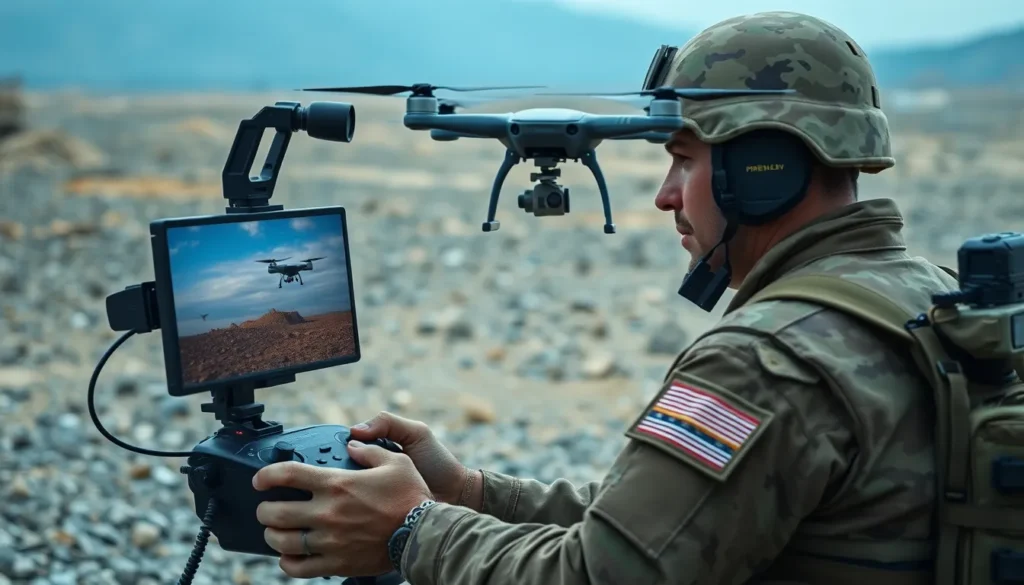
In the high-stakes world of modern warfare, drones have taken center stage, transforming the battlefield into a high-tech playground. Gone are the days of soldiers charging into combat; now, it’s all about remote-controlled robots zipping around, gathering intel, and delivering precision strikes. Who knew that the future of warfare would look like a video game gone rogue?
As military strategists embrace these flying machines, they’re not just changing tactics—they’re rewriting the rules of engagement. With the ability to surveil vast areas and strike with pinpoint accuracy, drones are redefining what it means to fight. But while they may seem like the ultimate weapon, they also raise questions about ethics, accountability, and the future of human soldiers. Buckle up as we dive into the thrilling yet complex world of battlefield drone warfare, where technology meets strategy in a whole new way.
Overview of Battlefield Drone Warfare
Battlefield drone warfare signifies a pivotal shift in military engagements, emphasizing remote operations over direct combat. Drones now play a central role in shaping modern tactics and strategies.
Definition and Evolution
Battlefield drone warfare refers to the use of unmanned aerial vehicles (UAVs) for surveillance, intelligence, and targeted strikes. Initially developed for reconnaissance, drones evolved into versatile platforms capable of delivering payloads and conducting real-time surveillance. The evolution gained momentum after conflicts in Afghanistan and Iraq, where their effectiveness showcased the benefits of unmanned operations over manned missions.
Key Technologies Involved
Key technologies underpinning battlefield drone warfare include advanced navigation systems, artificial intelligence, and weapon systems. GPS technology ensures precise positioning and navigation during missions. Artificial intelligence enhances data analysis and decision-making processes. Weapon systems often consist of precision-guided munitions designed for minimal collateral damage, thereby increasing operational effectiveness. Furthermore, communication technologies ensure real-time data transmission and coordination between drones and ground forces.
Advantages of Battlefield Drone Warfare
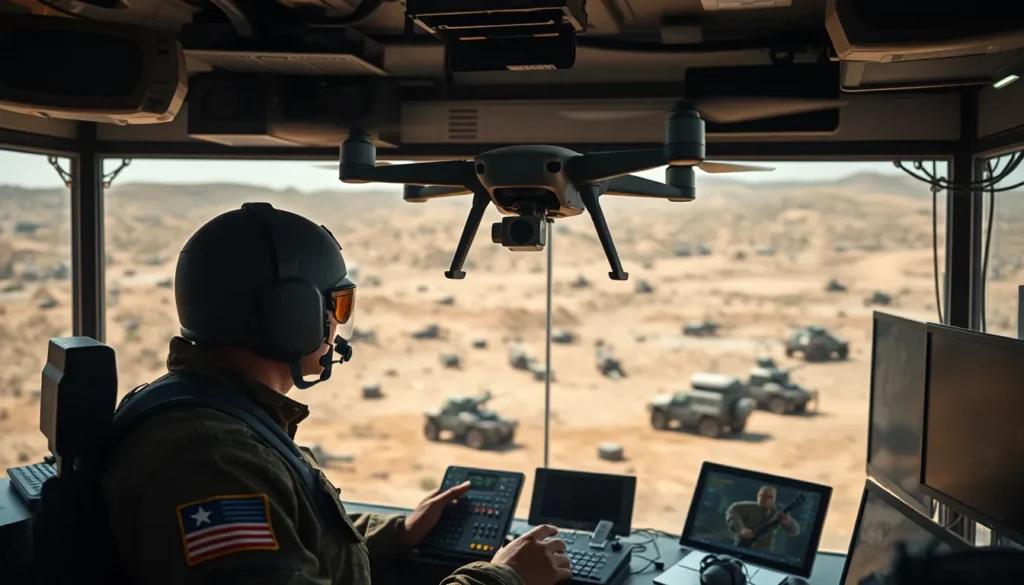
Battlefield drone warfare presents several advantages that reshape military operations. These benefits enhance the effectiveness of armed forces while minimizing risks associated with traditional combat.
Enhanced Surveillance Capabilities
Drones equipped with advanced sensors provide superior surveillance capabilities. UAVs gather real-time intelligence, enabling militaries to monitor enemy movements with high precision. Enhanced imaging technologies facilitate detailed reconnaissance, reducing the need for ground troops in high-risk areas. By operating at various altitudes, drones cover extensive regions swiftly. Commanders receive critical data, which aids in strategic decision-making, increasing operational effectiveness.
Reduced Risk to Human Life
Using drones lowers the exposure of military personnel to combat situations. Remote control operations eliminate the need for human soldiers to engage directly with the enemy. This reduction in risk not only saves lives but also preserves unit strength for future engagements. Automated systems can conduct dangerous missions, such as surveillance in hostile territories, without human casualties. Overall, the strategic advantage gained from minimizing risk has significant implications for military tactics and troop deployment.
Challenges and Ethical Considerations
Challenges persist in the realm of battlefield drone warfare, particularly regarding legal frameworks and moral implications.
Legal and Regulatory Issues
Legal issues arise as nations grapple with defining the extent of drone use in combat zones. International humanitarian law often lacks clarity on UAVs’ roles, creating jurisdictional dilemmas during military operations. Specific rules governing the use of force must be adapted to accommodate new technologies. Existing treaties may not adequately address drone warfare’s complexities. Developing unified regulatory standards across countries remains a pressing need to mitigate misunderstandings and potential abuses.
Moral Implications of Drone Warfare
Moral implications also warrant careful examination in drone warfare contexts. The detachment provided by remote operations can desensitize operators, leading to psychological and ethical concerns. Casualty calculations often prioritize military objectives, sometimes at the expense of civilian lives. This approach raises questions about accountability when decisions are made without direct oversight. Human oversight remains essential to maintain ethical standards and ensure responsibility in targeting practices. Balancing military advantage with humanitarian considerations poses a significant challenge in modern combat scenarios.
Case Studies in Battlefield Drone Warfare
Case studies highlight the transformative effects of drones in military operations. They illustrate the complexities and outcomes linked to drone warfare.
Notable Military Conflicts
Significant military conflicts showcase drone technologies’ impact on modern battles. In the 2011 Libyan Civil War, NATO utilized drones for precision strikes against Gaddafi’s forces. Their involvement led to decisive victories while minimizing civilian casualties. Similarly, the ongoing conflict in Yemen has seen the deployment of drones by both the Saudi-led coalition and Houthi forces. This use of UAVs emphasizes their capability to conduct detailed surveillance and targeted attacks.
Lessons Learned from Past Engagements
Engagements involving drones provide valuable lessons for future warfare strategies. Lessons from the War on Terror highlight the precision of drone strikes in eliminating high-value targets. The use of drones often reduced troop exposure and enhanced operational flexibility. However, conflicts like the Nagorno-Karabakh War demonstrate the importance of counter-drone measures. Learning how adversaries adapt to drone technologies reveals critical insights for military planners. Balancing operational advantages with ethical considerations remains essential for shaping future drone policies.
Future of Battlefield Drone Warfare
The future of battlefield drone warfare hinges on advancements that will reshape military operations.
Emerging Technologies and Trends
New technologies are constantly evolving within the realm of drone warfare. Artificial intelligence plays a crucial role in enhancing autonomous capabilities, enabling drones to make real-time decisions. Improved sensor technologies increase surveillance accuracy, allowing for better intelligence gathering during missions. Additionally, miniaturization of UAVs facilitates covert operations, expanding tactical options for military forces. Furthermore, innovations in cyber warfare techniques offer capabilities to disrupt enemy drone systems. Quantum computing promises to revolutionize data processing, providing faster analytical abilities for strategic planning. These emerging trends indicate a transformative landscape ahead for military operations.
Predictions for Military Strategy
Shifts in military strategy are inevitable with the integration of drones. Emphasis on remote warfare will likely increase, reducing reliance on ground troops in hostile environments. Commanders might prioritize fleet coordination among multiple drones to maximize operational effectiveness. Increased use of drones for reconnaissance will enhance situational awareness, ensuring informed decision-making in real time. Moreover, battleground dynamics will experience significant changes, especially with swarming strategies where multiple drones operate in unison. Ethical considerations will influence strategies as militaries respond to public scrutiny regarding civilian impacts. Future operations will adapt to these experiences, melding advanced technologies with evolving engagement rules.
Battlefield drone warfare is reshaping the landscape of modern military operations. As technology continues to advance, the reliance on drones for surveillance and targeted strikes will likely increase. This transformation presents both opportunities and challenges that military leaders must navigate.
The ethical implications and legal frameworks surrounding drone use remain critical areas for discussion. With the potential for reduced human casualties comes the responsibility to ensure accountability and adherence to international laws.
As the future unfolds, the integration of drones into military strategy will demand ongoing evaluation of their impact on warfare and society. Balancing technological advancements with ethical considerations will be essential for responsible military engagement in the years to come.